Fintech Phone Verification: Balancing Speed and Security in Onboarding
Why fintech apps in Southeast Asia are rethinking phone verification. Compare SMS OTP, WhatsApp and inbound call methods for speed, cost and fraud prevention.

Fintech phone verification is the first gatekeeper against fraud and the first friction point for users. In Vietnam and Southeast Asia, where e-wallets and mobile banking grow fast, delays from SMS OTPs or reliance on WhatsApp can lose customers at signup.
This guide maps verification methods to fintech needs: stopping fake accounts without slowing genuine users, meeting regulators’ ‘know your customer’ rules, and cutting costs where SMS fees or OTT dependencies add up.
Why phone verification is non-negotiable for fintech
Fintech apps must verify users' phone numbers to comply with regulations that link accounts to real identities. In Vietnam and Southeast Asia, this is often required for anti-money laundering (AML) and know-your-customer (KYC) rules. Phone verification ensures each user has a unique, traceable identity, reducing the risk of fraudulent activities.
Phone verification also acts as a first line of defense against multi-accounting and promo abuse. Without it, users can create multiple accounts to exploit promotions or manipulate systems. By tying accounts to verified phone numbers, fintech apps can enforce stricter limits and deter abuse.
After signup, SMS OTP often serves as a step-up authentication method for sensitive actions like transactions or password changes. While SMS OTP has its challenges, it remains a widely accepted and trusted method for verifying user intent. Combining phone verification at signup with SMS OTP for step-up authentication creates a layered security approach.
Understanding what phone number verification is and how it fits into fintech workflows is crucial for building secure, compliant, and user-friendly apps. It’s not just a technical requirement—it’s a cornerstone of trust in digital finance.
Fintech phone verification in Vietnam: Local hurdles
Verifying phone numbers in Vietnam comes with unique challenges. SMS delivery delays are common, especially when using bank-branded sender IDs. These delays can frustrate users and disrupt onboarding flows, leading to drop-offs and lost revenue.
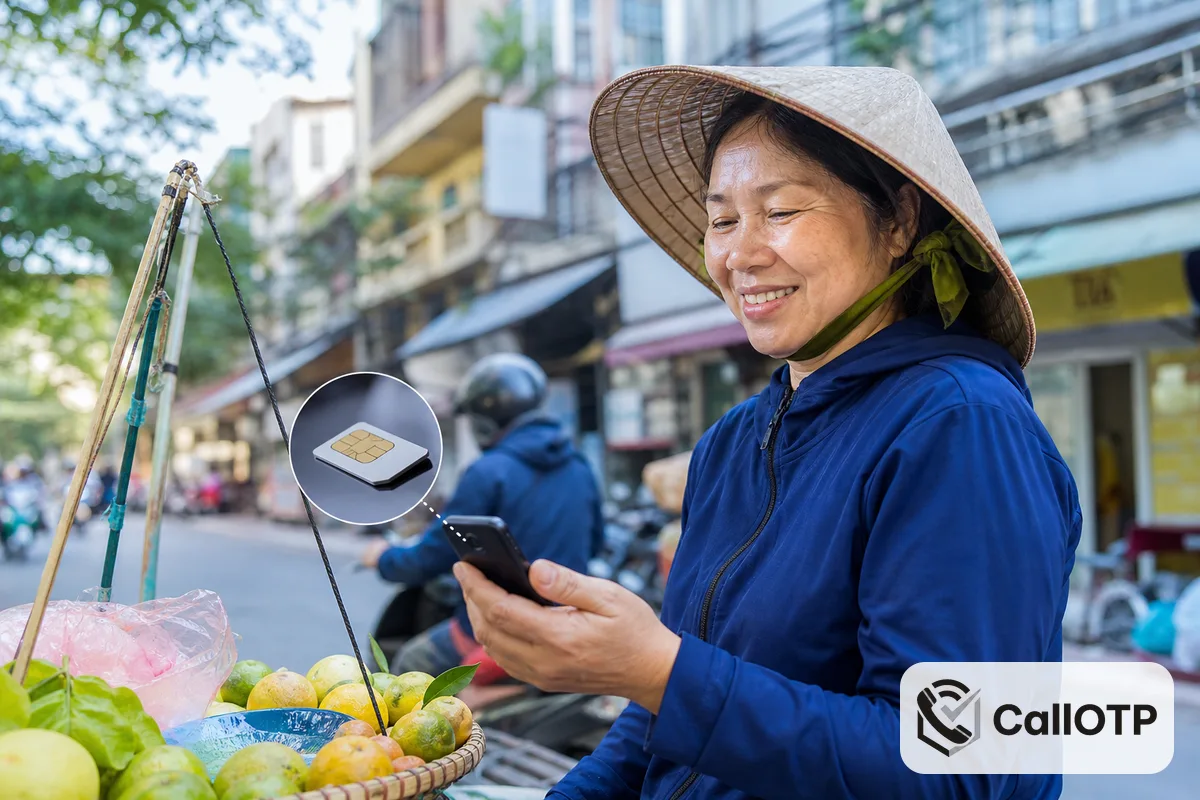
WhatsApp OTP is often seen as an alternative, but its adoption is uneven outside major cities. Many users in rural areas or older demographics don’t use WhatsApp regularly, making it an unreliable verification method for apps in Vietnam. For more details, check our guide on WhatsApp OTP pros and cons in Vietnam.
Low-end Android phones, which are widely used in Vietnam, add another layer of complexity. These devices often struggle with heavy verification flows, such as downloading OTT apps or handling multiple SMS prompts. Slow performance and limited storage can lead to user frustration and abandonment.
Given these hurdles, fintechs need a verification method that works reliably across devices and regions, without relying on SMS or OTT apps. Call-based verification can be a practical solution, as it requires only a basic phone feature—making a call—that works on even the most basic devices.
Comparing verification methods for security and UX
Fintech apps in Vietnam and Southeast Asia often rely on phone verification to ensure security and compliance. Each method has trade-offs in cost, reliability, and user experience. Here’s how they compare:
| Method | Security | User Experience | Cost |
|---|---|---|---|
| SMS OTP | Vulnerable to SMS pumping and SIM swaps | Reliant on SMS delivery, which can fail | High, especially for international SMS |
| WhatsApp/Zalo OTP | Depends on app security; risks with recycled numbers | Requires app installation, excludes non-users | Moderate, but tied to OTT platforms |
| Inbound call verification | No SMS fees, avoids SIM swap risks | No app install, works on basic phones | Low, as calls are rejected before connection |
SMS OTP is widely used but can be costly and unreliable, especially in regions with patchy SMS delivery. It’s also vulnerable to SMS pumping attacks, where fraudsters exploit OTP systems for profit. WhatsApp and Zalo OTPs solve some delivery issues but require users to install an app, which excludes those who don’t use these platforms. Additionally, recycled numbers can pose security risks.
Inbound call verification offers a middle ground. It eliminates SMS fees and app dependencies, making it accessible even on basic phones. By rejecting the call before connection, it ensures users incur no charges. This method is particularly effective for apps in Vietnam and Southeast Asia, where SMS costs and delivery gaps are common concerns. For a deeper dive into how inbound calls compare to other methods, check out our detailed comparison.
Where call-based verification fits in fintech flows
Call-based verification can streamline fintech onboarding and security workflows, especially in Vietnam and Southeast Asia, where SMS delivery issues and OTT app availability can complicate traditional methods. Here’s where it fits naturally:

- First-time user onboarding: During sign-up, users can verify their phone number instantly by tapping to call a hotline. This eliminates the need for SMS OTP codes or OTT apps, reducing friction and ensuring the number is valid before proceeding.
- Step-up authentication for high-risk transactions: For sensitive actions like fund transfers or account changes, call-based verification adds an extra layer of security without requiring users to switch apps or wait for SMS codes. It’s quick and seamless, enhancing trust without disrupting the flow.
- Fallback when SMS fails or users lack OTT apps: In cases where SMS OTPs don’t deliver or users don’t have WhatsApp, Zalo, or similar apps installed, call-based verification provides a reliable alternative. It ensures users can complete verification without delays or frustration.
Integrating call-based verification into these flows is straightforward. Developers can embed the API into their existing systems, triggering the hotline call when needed and receiving verification results instantly via webhook or API. This flexibility makes it a practical choice for fintechs looking to balance security, user experience, and reliability.
Stopping fraud without frustrating users
Fraud prevention in fintech requires balancing security with user experience. While SIM swap attacks are a concern, relying solely on one verification method can create vulnerabilities. Instead, adopt a layered approach that combines multiple techniques.
Device fingerprinting and behavior checks add depth to phone verification. By analyzing factors like device type, location, and usage patterns, you can flag suspicious activity without interrupting legitimate users. For example, a sudden login attempt from a new device or an unusual location can trigger additional verification steps.
Edge cases like VoIP numbers and call forwarding require careful handling. VoIP numbers, often used for fraud, can be detected and flagged during verification. Call forwarding, while less common in Vietnam, can be mitigated by combining call-based verification with other methods like device binding or biometric checks.
Call-based verification, when layered with other security measures, offers a robust yet user-friendly solution. It avoids the delays and costs of SMS OTP while reducing reliance on third-party apps like WhatsApp or Zalo. For fintech apps in Southeast Asia, this approach can streamline onboarding without compromising security.
Ultimately, the goal is to stop fraudsters without frustrating legitimate users. By combining phone verification with device fingerprinting, behavior analysis, and other security layers, fintechs can protect accounts while maintaining a seamless user experience.
Integrating verification into your fintech app
To integrate phone verification into your fintech app, start by sending the user's phone number to the CallOTP API. The API returns a hotline number, which the user taps to call from the device being verified. The system matches the caller ID, rejects the call before it connects (so the user pays nothing), and returns the verification result via webhook or API.
Design your API calls to handle retries gracefully. If the user doesn't call within the timeout period, your app can prompt them to try again or offer an alternative method like SMS OTP. This fallback ensures verification completes even if the user misses the call or encounters network issues.
For real-time results, use webhooks instead of polling. Webhooks notify your app immediately when verification succeeds or fails, reducing latency. Check the comparison of webhooks and polling to decide which fits your app's architecture.
Clear user messaging is key. If verification stalls, guide the user with specific instructions like 'Tap to call the hotline now' or 'Call didn't go through? Try again or switch to SMS.' Avoid generic error messages that leave users unsure what to do next.
Finally, test the integration thoroughly. Simulate different scenarios, such as missed calls, delayed webhooks, and fallback methods, to ensure a smooth user experience. By handling edge cases upfront, you can streamline verification and reduce support requests.
For fintechs in Vietnam and Southeast Asia, phone verification must be secure but invisible. Try inbound call verification as a cost-effective alternative to SMS OTP—with a free trial to test delivery rates in your user base.
Frequently asked questions
How does inbound call verification meet KYC requirements?+
It confirms the user controls the phone number, like SMS OTP. For full KYC, pair it with ID checks or liveness tests as your regulator requires.
What if users don’t answer the verification call?+
The system rejects the call instantly, so no answer is needed. Users just initiate the call from the number being verified.
Can fraudsters spoof caller ID for inbound verification?+
Caller ID spoofing is harder than SMS interception, but layer it with IP checks or behavior signals for high-risk transactions.
How does cost compare to SMS OTP for fintech scale?+
Inbound calls avoid per-SMS fees, with costs driven by call duration. Since calls reject instantly, costs stay low even at high volume.
Do Vietnamese telcos support call-based verification?+
Yes, it uses standard call routing. Unlike SMS, it doesn’t depend on sender ID approvals or regional SMS interconnect fees.
- #fintech
- #phone verification
- #onboarding
- #fraud prevention
- #vietnam fintech
Ready to verify phone numbers with one call?
Start free trial