Voice OTP Costs Explained: Inbound Call vs Outbound Verification
Compare how traditional voice OTP costs add up versus inbound call verification that rejects calls before connection. Learn which method fits apps in Vietnam.

Voice OTP costs add up quickly when bots trigger unnecessary outbound calls. Traditional voice verification calls connect for 15–20 seconds to read a code, incurring carrier charges each time—even for fraudulent attempts.
For apps in Vietnam and Southeast Asia, inbound call verification offers a cost-efficient alternative. The system rejects calls before connection when verifying numbers, so users pay nothing and businesses avoid paying for bot-triggered calls.
How voice OTP costs accumulate per verification
Traditional voice OTP systems place an outbound call to the user's phone number, which must connect for 15–20 seconds to deliver the verification code. Carriers charge businesses for every second of connected call time, typically with a minimum billing increment (e.g., 30 seconds or 1 minute). This creates three cost drivers:
- Fixed call duration: Even a 6-digit code read aloud takes 15+ seconds, often rounding up to a full minute.
- International rates: Cross-border verification (e.g., a Vietnamese app verifying a Thai number) incurs higher per-minute fees.
- Call pumping fraud: Bots can trigger unlimited verification calls to premium numbers or unused routes, with the business paying for each attempt.
In Vietnam and Southeast Asia, where SMS and call pumping attacks frequently target verification systems, outbound voice OTP is particularly vulnerable. Each fraudulent call consumes the same airtime as a legitimate one, with no way to distinguish valid requests until after the cost is incurred.
For businesses, this means unpredictable verification expenses that scale with both real users and malicious traffic. Voice OTP also lacks the built-in spam protection of inbound methods, where costs only apply when a user actively calls a hotline.
Inbound call verification: The cost-saving alternative
Inbound call verification flips the cost structure of traditional voice OTP. Instead of your system placing an outbound call to the user, the user calls a dedicated hotline from the phone number being verified. The system matches the caller ID against the expected number and rejects the call before connection—avoiding carrier charges for both parties.
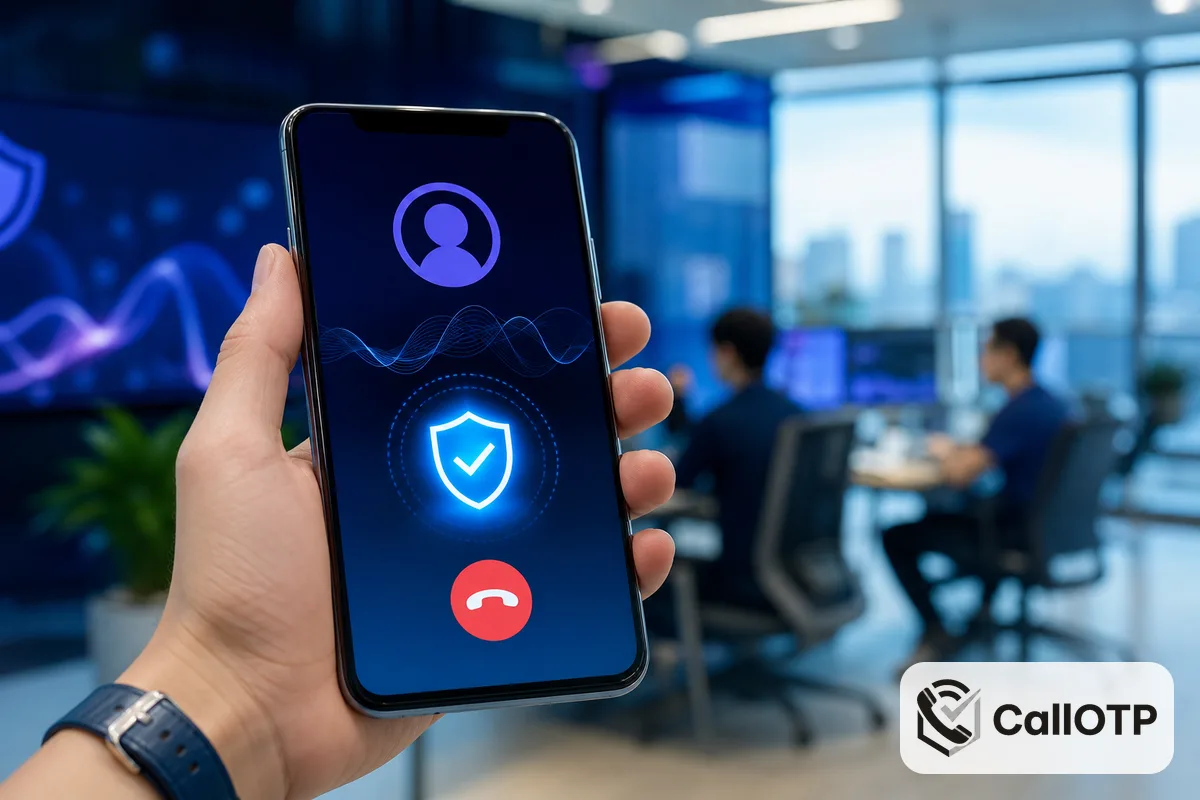
This approach eliminates three major cost drivers of voice OTP:
- No per-attempt fees: Businesses pay only when a real user completes verification. SMS or call pumping attacks that spam the API with fake requests cannot generate charges.
- No airtime costs: Since the call never connects, carriers do not charge for call duration (typically 15–20 seconds per voice OTP).
- No IVR development: The system handles caller ID matching automatically—no need to record voice prompts or design call flows.
For apps in Vietnam and Southeast Asia, inbound verification works with all carriers and requires no special integrations. Users simply tap a phone number (on mobile) or scan a QR code (on desktop) to trigger the call. The experience is consistent across iOS, Android, and web—unlike flash call which cannot auto-verify on iPhones due to call log restrictions.
Security improves because the business controls when numbers are eligible to call the hotline. Time-bound verification windows and rate limiting prevent attackers from brute-forcing numbers through the service.
Voice OTP cost comparison table
Understanding the cost drivers of voice OTP and inbound call verification helps businesses choose the right solution for their needs. Below is a comparison of key factors that influence costs for each method:
| Factor | Voice OTP | Inbound Call Verification |
|---|---|---|
| Call duration | Typically 15–20 seconds to read the code | Call rejected before connection; no duration |
| Fraud vulnerability | Susceptible to call pumping, where bots trigger calls to inflate costs | No cost for unverified calls; bots cannot exploit the system |
| Carrier fees | Business pays for outbound calls, including failed attempts | No carrier fees; caller pays nothing as the call is rejected |
| Developer effort | Requires IVR setup and voice message design | Simple API integration; no IVR or voice message needed |
| User experience | Works on all phones but requires listening to a code | One-tap verification; no need to listen or type |
Voice OTP costs accumulate due to call duration, carrier fees, and vulnerability to fraud. Inbound call verification eliminates these factors by rejecting calls before connection and charging only for successful verifications. For apps in Vietnam and Southeast Asia, where fraud risks are higher, inbound verification offers a cost-effective and secure alternative. Developers benefit from simpler integration, while users enjoy a seamless experience across devices.
Why call pumping fraud targets voice OTP in Vietnam
In Vietnam, where mobile penetration is high and phone numbers are a primary identifier for online accounts, fraudsters often exploit voice OTP systems for financial gain. Voice OTP is typically used for sensitive transactions like account recovery or payment confirmations, making it a target for abuse.
Promotions and referral programs, common in Vietnam’s competitive app market, are particularly vulnerable. Fraudsters use bots to trigger multiple voice OTP requests, racking up costs for businesses without completing legitimate verifications. Traditional voice OTP systems lack built-in protection against this type of promo abuse, leaving businesses exposed to budget drain.
Inbound call verification offers a solution by shifting the cost burden. Instead of businesses paying for every outbound voice OTP call, users initiate the verification process by calling a hotline. The system rejects the call before it connects, ensuring no charges are incurred. This approach inherently blocks automated pumping attempts, as fraudsters cannot profit from triggering verification requests.
For apps in Vietnam and Southeast Asia, where fraud prevention is critical, inbound verification provides a cost-effective and secure alternative to traditional voice OTP methods. By eliminating the financial incentive for call pumping, businesses can focus on delivering a smooth user experience while protecting their budgets.
User experience trade-offs for apps in Southeast Asia
Voice OTP verification forces users to listen to a 15–20 second automated call to hear a code, then type it manually. This creates friction, especially in noisy environments common in urban Vietnam. Inbound call verification skips the message entirely—the system hangs up immediately after recognizing the caller ID.

For apps in Vietnam and Southeast Asia, three UX factors matter most:
- No app or SMS dependency: Works on any mobile phone (even feature phones) without requiring users to install WhatsApp, Zalo or other OTT apps or wait for SMS delivery
- iOS compatibility: Unlike flash call, it doesn't need call-log access—a restriction Apple enforces strictly—so verification works equally on iPhone and Android
- Cross-device flow: Mobile users tap one tel: link to open the dialer; desktop users scan a QR code with their phone camera, avoiding manual number entry
Developers should weigh these against their user base's tech literacy and device mix. A phone verification UX checklist helps spot potential drop-off points during implementation.
Implementation considerations for developers
Inbound call verification simplifies integration compared to traditional voice OTP systems. Developers work with just two API endpoints (create verification, check status) and one webhook for real-time results. No IVR setup, call flow design, or voice message recording is needed—the system automatically rejects recognized calls before connection.
The stateless API design works with any programming language. Sample integration prompts for AI coding assistants like ChatGPT or Claude are available in the portal, letting developers generate working code snippets quickly. For example, you can add phone verification to your app with a few lines of code calling the hotline assignment endpoint.
- No carrier approvals: Unlike SMS OTP, no sender ID or brandname registration is required
- Self-serve testing: The portal provides test numbers and live logs for debugging
- QR fallback: Web apps can display a QR code for mobile users to scan and call
For apps in Vietnam and Southeast Asia, the inbound approach avoids common SMS delivery issues while maintaining compatibility across devices. iOS users get the same one-tap experience as Android since the method doesn’t require call log access. The webhook can trigger your app’s next step (account creation, checkout completion) immediately after verification.
For apps in Vietnam and Southeast Asia facing rising verification costs, inbound call verification offers protection from call pumping while maintaining accessibility. Try it with a free trial to compare the difference.
Frequently asked questions
Can users spoof caller ID to bypass inbound verification?+
Caller ID spoofing is blocked at the carrier level in Vietnam and most countries. The system only accepts calls from real mobile numbers with valid caller IDs.
How does inbound verification handle dual SIM phones?+
Users call from the SIM they want to verify. The system matches the calling number regardless of which SIM is active for calls.
What happens if the user's phone can't make calls?+
Inbound verification requires call capability, but this covers 99% of Vietnamese mobile users. For edge cases, consider fallback to SMS or other methods.
Is inbound call verification slower than voice OTP?+
Both methods are similarly fast—under 10 seconds typically. Inbound may be faster since users don't wait to hear a code read aloud.
Can we use inbound verification for login as well as signup?+
Yes, the same inbound call flow works for any verification step—signup, login, checkout, or account changes.
- #voice otp
- #verification cost
- #inbound call
- #call pumping
- #vietnam apps
Ready to verify phone numbers with one call?
Start free trial