WhatsApp OTP: Pros, Cons and Alternatives for Apps in Vietnam
WhatsApp OTP can simplify verification, but depends on users having the app. Learn when it works, its limitations, and how to combine it with other methods in Vietnam.

WhatsApp OTP is a popular choice for phone verification in Vietnam, where the app has widespread adoption. It lets users receive one-time passwords via chat instead of SMS, often with better delivery rates and lower costs.
But relying solely on WhatsApp OTP creates risks. Users must have the app installed and linked to the number being verified. Template approval delays can block launches, and not all users check messages promptly. For apps in Vietnam and Southeast Asia, understanding these trade-offs helps design more reliable verification flows.
How WhatsApp OTP works for phone verification
WhatsApp OTP delivers one-time passcodes through the messaging app instead of SMS. Businesses must register with WhatsApp's Business API and use approved message templates that include a dynamic code field. When an app needs to verify a user's phone number, it triggers the system to send a formatted OTP message through WhatsApp's infrastructure.
The process follows three steps:
- The app submits the user's phone number to the verification service
- WhatsApp delivers a message containing a 4–6 digit numeric code to the user's WhatsApp account (if the number is registered with WhatsApp)
- The user manually enters this code in the app, which verifies it against the originally sent value
This method relies on the user having an active WhatsApp account linked to the phone number being verified. Unlike phone verification methods that work directly through carriers, WhatsApp OTP requires the messaging app to be installed and properly set up. For apps in Vietnam, this dependency can create friction for users who prefer alternative messaging platforms or face device compatibility issues.
Advantages of WhatsApp OTP in Vietnam
WhatsApp OTP offers several benefits for apps in Vietnam, where the platform dominates messaging:

- High open rates: Users typically check WhatsApp frequently, making OTP messages more likely to be seen quickly compared to SMS. This speeds up verification during sign-up or login.
- Lower costs: WhatsApp Business API pricing often undercuts local SMS rates, especially for high volumes. No per-carrier fees apply, simplifying budgeting.
- Rich messaging: Brands can include logos, formatted text, and quick-reply buttons in OTP messages—unlike SMS's plain text. This improves recognition and reduces user errors.
- Familiar flow: Users already open WhatsApp daily for personal chats. Tapping a notification feels natural, avoiding the friction of unfamiliar verification methods.
For services targeting younger or urban Vietnamese users—where WhatsApp penetration is highest—these factors can streamline onboarding. The platform also handles Vietnam's mix of mobile carriers uniformly, unlike SMS delivery which may vary by network.
Key limitations and risks
WhatsApp OTP relies on conditions that can break your verification flow:
- App dependency: The user must have WhatsApp installed, linked to the phone number you’re verifying, and with notifications enabled. In Vietnam, where users often switch between multiple SIMs or devices, this can create friction.
- Template approval delays: WhatsApp requires pre-approved message templates for OTPs. Review can take days, blocking feature launches or urgent updates.
- Delivery failures: Messages won’t arrive if the user blocked your business number, disabled app notifications, or has no data/Wi-Fi. Unlike SMS, there’s no fallback to cellular networks.
- Service outages: WhatsApp downtime (like the 2021 global outage) halts your verifications. For apps in Vietnam, where Meta services face occasional disruptions, this adds risk.
These gaps matter most when verifying new users who may not yet trust your brand enough to troubleshoot delivery issues. For higher-risk actions like password resets, consider layering WhatsApp with other methods to reduce dependency on a single channel.
WhatsApp OTP for apps in Vietnam: Local considerations
WhatsApp penetration in Vietnam varies by user segment. Urban professionals and younger users often have it installed, while rural populations or older demographics may use Zalo or basic phones without app stores. Apps targeting broad audiences should expect a meaningful share of users not to have WhatsApp, so plan a fallback method.
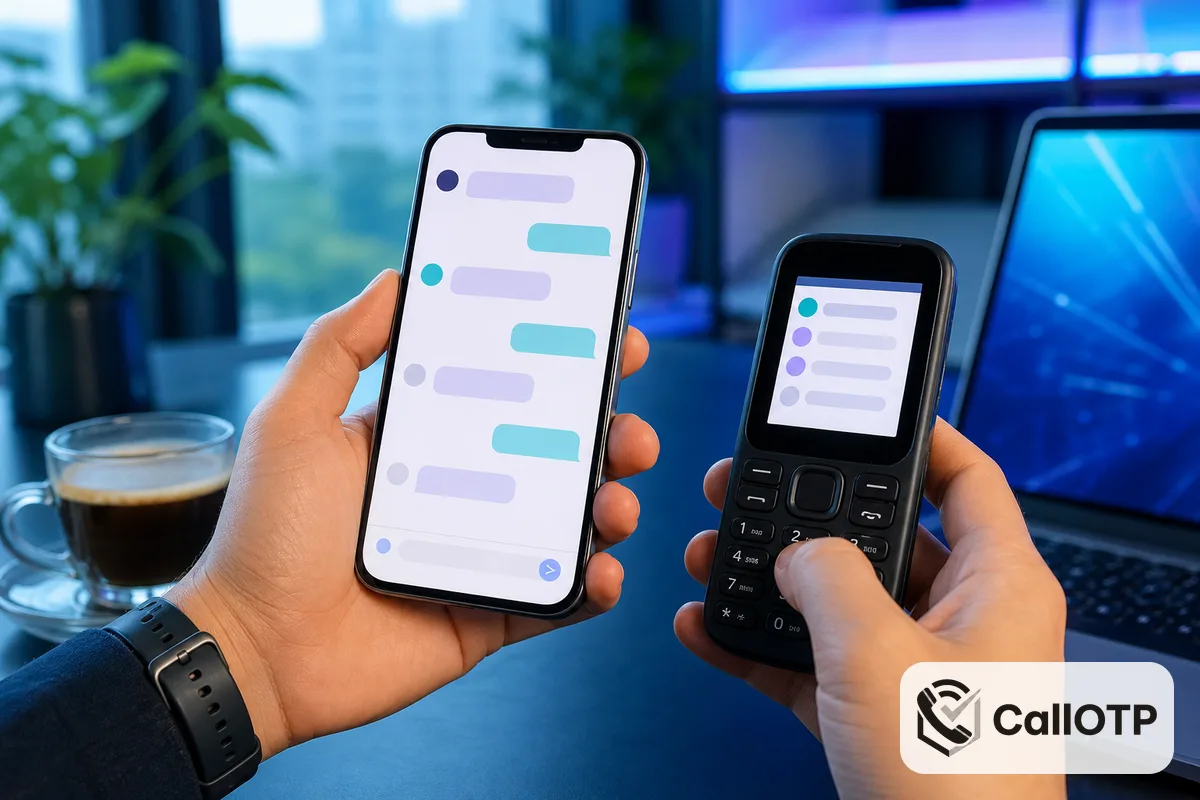
- Device limitations: Low-end Android phones with limited storage or RAM may force-close WhatsApp during verification, causing timeouts. Users often delete inactive apps to save space.
- Multi-SIM behavior: Many Vietnamese carry separate work/personal SIMs. If the number registered with WhatsApp differs from your app's input, OTPs fail silently.
- Carrier quirks: Some prepaid SIMs block non-Vietnamese services intermittently. WhatsApp may show "connecting" indefinitely on these networks.
For better coverage, combine WhatsApp OTP with fallbacks like:
- SMS to the same number (catches users with WhatsApp on a different device)
- Call-based verification (works on all mobile phones without app installs)
- Zalo OTP for users who prefer Vietnam's dominant messaging platform
When to combine WhatsApp with other methods
While WhatsApp OTP is widely used in Vietnam, relying solely on it can exclude users without the app or with limited connectivity. For apps in Vietnam and Southeast Asia, combining WhatsApp with alternative verification methods ensures broader reach and reliability.
Fallback flows: Not all users have WhatsApp installed or prefer messaging apps. Offering a fallback method like inbound call verification ensures smooth verification for these users without disrupting their experience.
High-value transactions: For sensitive actions like fund transfers or account changes, multi-factor authentication (MFA) adds an extra layer of security. Combining WhatsApp OTP with an email link or authenticator app reduces fraud risks.
Segmented user bases: Older users or those in rural areas may not use WhatsApp regularly. Younger, urban users often prefer it. Tailoring verification methods to these segments improves onboarding success.
Redundancy during outages: WhatsApp outages, though rare, can disrupt verification flows. Having a backup method like SMS or voice OTP ensures continuity during such events.
WhatsApp OTP vs alternatives: A comparison
Choosing a phone verification method involves trade-offs between delivery reliability, user experience, cost and implementation effort. Here’s how WhatsApp OTP compares to common alternatives for apps in Vietnam:
| Factor | WhatsApp OTP | SMS OTP | CallOTP (inbound call) | Authenticator apps |
|---|---|---|---|---|
| Delivery reliability | Depends on WhatsApp service | Varies by carrier | Uses standard voice calls | Internet-independent |
| User friction | Requires app install | No app needed | One-tap call (no typing) | Setup required |
| Cost structure | Free but rate-limited | Per-message fees | No call charges | Fixed development |
| Implementation | API integration | Carrier contracts | Simple API call | SDK integration |
Delivery reliability: WhatsApp OTP avoids carrier delivery issues but fails if users lack the app or data connectivity. SMS delivery in Vietnam can be inconsistent across rural networks. CallOTP uses basic voice infrastructure, which typically has wider coverage than SMS or data services.
User friction: WhatsApp requires app installation and permissions, which may deter some users during signup. SMS forces code typing, while CallOTP’s one-tap verification often improves conversion rates in Southeast Asia.
Cost and scalability: WhatsApp’s free tier suits small apps but has strict rate limits. SMS costs scale linearly with users. CallOTP avoids per-verification fees by rejecting calls before connection. Authenticator apps shift costs to initial development.
Security considerations for messaging app OTP
While WhatsApp OTP avoids some SMS vulnerabilities like SIM swap, it introduces other risks. Attackers can still hijack accounts via SIM swap if they socially engineer carriers—WhatsApp's SMS-based account recovery becomes the weak link. In Vietnam, where SIM registration rules are strict but social engineering occurs, this remains a concern.
Template hijacking is another risk. If attackers gain access to a business's WhatsApp Business API credentials, they can send fake OTPs or phishing messages. Combined with social engineering (e.g., "Your OTP is 123456—click here to confirm"), this can bypass traditional SMS pumping defenses.
Practical safeguards for apps in Southeast Asia:
- Rate limit OTP attempts—block IPs or devices after 3-5 failed tries
- Monitor template usage for sudden spikes in OTP requests
- Layer with device checks (e.g., block new devices after failed attempts)
- Combine methods—use WhatsApp for convenience but fall back to call-based verification for high-risk actions
No single method is foolproof. For financial transactions or account changes, consider step-up authentication like requiring a verified call or biometric check after the initial WhatsApp OTP.
WhatsApp OTP works well when users reliably have the app, but smart verification flows combine methods. For numbers not linked to WhatsApp or during outages, phone verification by inbound call provides a zero-cost, app-independent alternative users can complete with one tap.
Frequently asked questions
How long does WhatsApp template approval take for OTP messages?+
Approval typically takes 24-72 hours but can vary. Always test templates well before launch as rejections require resubmission.
Can users receive WhatsApp OTP without internet?+
No, WhatsApp requires data or WiFi. Users on cellular-only plans may not get messages until they connect to WiFi.
Is WhatsApp OTP cheaper than SMS in Vietnam?+
Often yes, but costs depend on volume and provider. WhatsApp charges per conversation session, not per message, which can reduce costs for active users.
How do I handle users who don't have WhatsApp installed?+
Implement fallback to SMS or call verification, either automatically after a timeout or by letting users choose their preferred method.
Can I use WhatsApp OTP for voice-only numbers?+
No, WhatsApp requires a mobile number capable of receiving SMS for initial setup. Consider verification by call for these cases.
- #whatsapp otp
- #otp methods compared
- #phone verification vietnam
- #messaging apps
- #user authentication
- #fraud prevention
- #southeast asia
Ready to verify phone numbers with one call?
Start free trial