How to Reduce Booking No-Shows with Phone Verification
Stop no-shows by verifying customers' phone numbers with a simple call before holding their booking slot. No SMS fees, no OTT app dependency—just instant confirmation.

No-shows cost clinics, salons and restaurants time and money—every empty slot means lost revenue and wasted staff hours. Traditional SMS verification often fails to stop fake bookings because bad actors easily bypass it with burner numbers or SIM farms. Call-based phone verification solves this by confirming each customer is reachable at their claimed number before their booking is confirmed.
For businesses in Vietnam and Southeast Asia, where SMS delivery is unreliable and WhatsApp OTP excludes non-users, inbound call verification offers a simpler path: customers tap to call a hotline from their own phone, proving it's real, while your system gets instant confirmation without SMS fees.
Why phone verification cuts no-shows
Fake or disposable phone numbers often drive no-shows in booking systems. These numbers, typically generated for one-time use, fail phone verification because they cannot receive inbound calls. By requiring verified numbers, businesses filter out fraudulent or unserious bookings, reducing the risk of wasted resources.
Verified phone numbers also create higher accountability. Users with real, traceable numbers are more likely to honor their commitments, as they know their identity is tied to the booking. This is especially effective in Vietnam and Southeast Asia, where phone numbers are often linked to personal identity and used across multiple services.
Call rejection ensures that verification does not become a cost barrier for users. Unlike SMS or voice OTPs, which charge the recipient, CallOTP rejects the call before it connects, so the user pays nothing. This seamless experience encourages users to complete the verification process without hesitation, increasing the likelihood of genuine bookings.
By integrating phone verification into booking workflows, businesses can reduce no-shows, improve operational efficiency, and focus on serving serious customers.
How call verification works for booking systems
Call verification confirms a customer's phone number during booking—without SMS codes or third-party apps. Here's how it works for businesses in Vietnam and Southeast Asia:

- API request: Your booking system sends the customer's phone number to CallOTP's API and receives a hotline number.
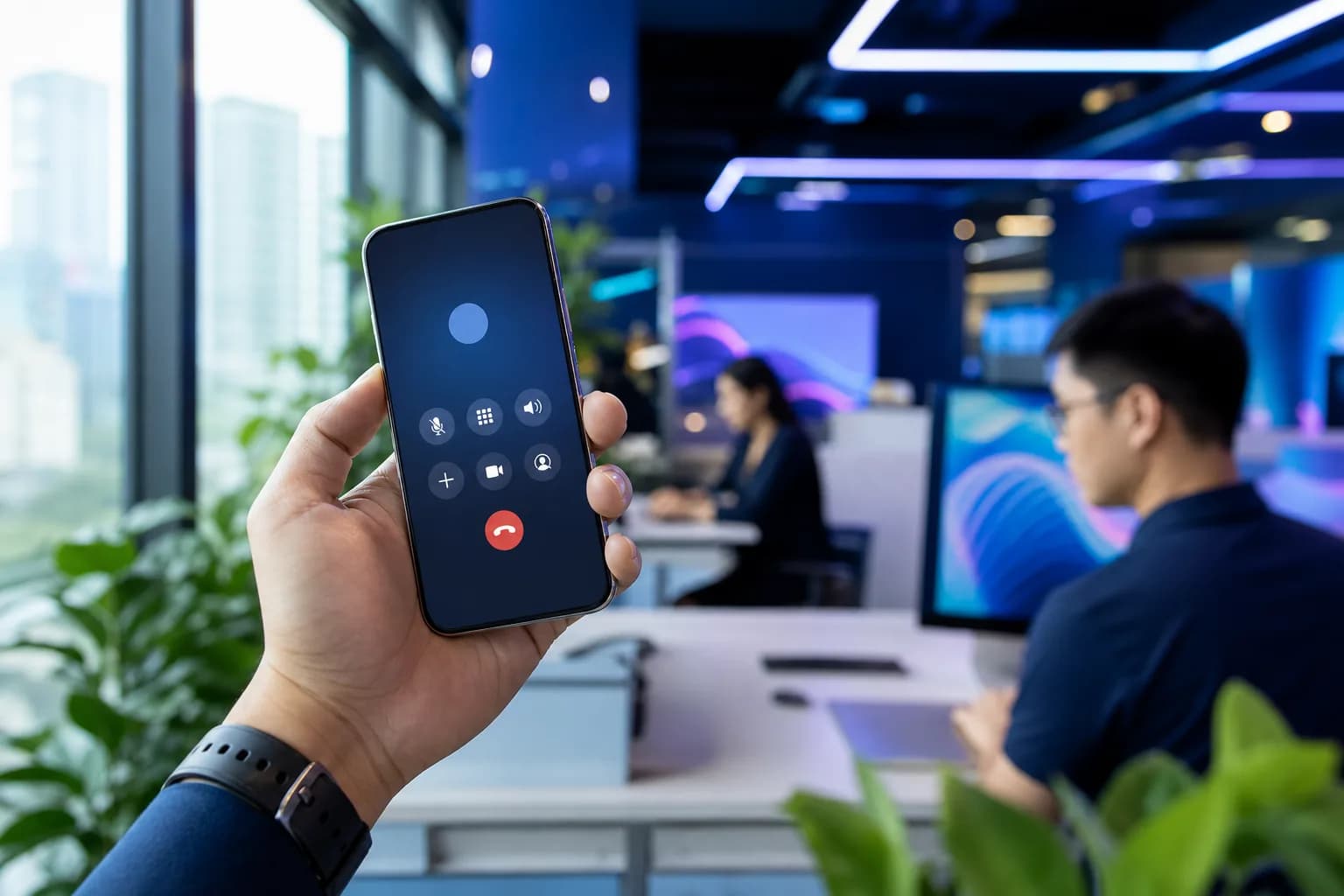
- Customer call: The customer taps to call the hotline from the phone being verified. No code entry or app installation is needed.
- Instant rejection: CallOTP matches the caller ID to the submitted number and rejects the call before connection. The customer sees a missed call and pays nothing.
- Verification result: Your system receives the result via webhook or API poll within seconds—confirmed number or failure reason.
Key advantages for reducing no-shows:
- Zero carrier charges: Calls are rejected before connection, so customers incur no fees—unlike SMS or completed voice calls.
- Higher completion rates: Customers simply tap to call, with no need to type codes or switch apps like WhatsApp/Zalo.
- Real-time validation: Verified numbers confirm active devices, unlike email-only bookings prone to typos or fake addresses.
For technical implementation details, see our phone verification by call guide. Integration typically takes under a day with most booking platforms.
Comparing verification methods for Vietnam
Choosing the right phone verification method for apps in Vietnam requires balancing cost, reliability, and user experience. Each method has trade-offs, especially in Southeast Asia's diverse mobile landscape.
| Method | Advantages | Challenges |
|---|---|---|
| SMS OTP | Widely recognized | High cost, delivery delays, vulnerable to SIM farms |
| WhatsApp/Zalo OTP | No SMS fees | Excludes non-users, requires app installs |
| Inbound call | Works on any mobile, no typing or app needed | Depends on caller ID accuracy |
SMS OTP remains common but often faces delivery delays and higher costs, especially in rural areas. It’s also susceptible to SIM farm attacks, where fraudsters use bulk SIM cards to abuse systems.
WhatsApp and Zalo OTPs bypass SMS fees but exclude users who don’t have these apps installed. This can be a barrier in Vietnam, where app adoption varies widely. Learn more about WhatsApp OTP pros and cons.
Inbound call verification simplifies the process: users tap to call a hotline, and the system verifies their number automatically. It works on any mobile phone, requires no typing or app installs, and avoids SMS fees. However, its effectiveness relies on accurate caller ID recognition.
Reducing no-shows for apps in Vietnam: Key considerations
Phone verification must work reliably across Vietnam’s diverse mobile landscape to effectively reduce booking no-shows. Three factors are critical for local apps:
- Low-end phone compatibility: Call-based verification works on any mobile phone—no smartphone or app installation required. This covers users in Vietnam with basic feature phones or limited data plans, who might otherwise be excluded by SMS or OTT-dependent methods.
- No SMS sender ID delays: Unlike SMS OTP, which often requires lengthy sender ID registration with carriers, call verification uses standard inbound hotlines. This avoids bureaucratic hurdles and keeps launch timelines predictable.
- Edge case handling: Dual-SIM users are common in Vietnam. Call verification automatically detects the active SIM used to make the call, unlike SMS OTP which may deliver codes to the wrong SIM. For other edge cases like call forwarding, real-time webhooks can flag numbers needing manual review.
For booking platforms in Southeast Asia, these technical choices directly impact no-show rates. Systems that fail to verify low-end phones or dual-SIM devices often see higher no-shows from unconfirmed or fraudulent bookings. Call verification sidesteps these gaps while keeping user friction minimal—a tap to call the hotline is simpler than typing codes from an SMS or switching apps.
Integrating with booking platforms
To reduce booking no-shows, integrate phone verification at key points in your flow—signup, checkout, or confirmation. CallOTP's API works with most platforms via webhooks or direct API calls. Choose webhooks for real-time slot confirmation to avoid delays from polling.

Key steps
- Add a phone number field if not present
- Call the verification API when the user submits their number
- Show a "Call to verify" button with the returned hotline number
- Confirm verification via webhook before finalizing the booking
For apps in Vietnam, this works without SMS dependencies. Sample API request (illustrative):
| Field | Value |
|---|---|
| endpoint | api.callotp.com/verify |
| method | POST |
| body | {"phone": "+84..."} |
Response includes a hotline number and verification ID. The webhook returns:
verified: true/falsephone(normalized)timestamp
See integration guides for platform-specific examples. For Southeast Asian users, this method avoids SMS delivery issues while keeping costs low.
Stopping promo abuse with verified bookings
Verified phone numbers help booking platforms in Vietnam combat promotional abuse without blocking legitimate users. By requiring call verification for discounts or loyalty points, you create a frictionless but effective barrier against fraud.
Prevent duplicate accounts for discount stacking
- Link each promo code or first-time discount to a verified phone number
- Flag accounts sharing numbers across multiple profiles
- Use silent verification via inbound call verification to avoid SMS costs while maintaining security
Secure loyalty programs with verified numbers
Attach loyalty tiers or points to phone numbers instead of email addresses or usernames. This makes it harder for fraudsters to:
- Resell accumulated points on secondary markets
- Create fake accounts to farm sign-up bonuses
- Exploit referral programs with bot-generated accounts
Detect fraud patterns early
Booking systems can analyze verification attempts to spot abuse signals:
- Multiple accounts verifying from the same device
- Rapid verification bursts from new numbers
- Discrepancies between caller ID and account location data
For apps in Vietnam, call-based verification works particularly well against SMS pumping attacks that exploit OTP costs. Since users verify by making an unpaid call instead of receiving SMS, fraudsters can't generate charges through fake bookings.
Cut no-shows and fake bookings today with call-based phone verification—no upfront costs, no carrier contracts. Start with a free trial and see the difference real customers make.
Frequently asked questions
Does call verification work for landline bookings?+
No, it only verifies mobile numbers capable of making outbound calls.
What if a customer's phone can't make calls?+
Provide SMS OTP as a fallback, though this increases cost and fraud risk.
How quickly does verification happen?+
Most calls are verified within seconds as the system rejects them instantly upon caller ID match.
Can customers spoof their caller ID?+
Caller ID spoofing is rare in Vietnam and easily detected by carriers during the call attempt.
Is there a limit on verification attempts per number?+
You can set attempt limits and timeouts to prevent abuse—consult the portal docs for details.
- #no-shows
- #booking
- #phone verification vietnam
- #restaurants
- #clinic
Ready to verify phone numbers with one call?
Start free trial