
How to Prevent Fake Accounts Without Hurting Genuine Users
Stop fake sign-ups with layered verification: phone checks, device signals and rate limits that catch fraudsters while keeping UX smooth for real users in Vietnam and Southeast Asia.
Prevent fake accounts at sign-up without frustrating real users—a daily challenge for apps and e-commerce platforms in Vietnam. SMS OTP verification, while common, has high costs, delivery delays, and vulnerabilities to SMS pumping attacks. Promotional abuse, fake COD orders, and credential stuffing thrive when verification is weak.
A layered approach combines phone verification by inbound call (no SMS fees or OTT app dependency), rate limiting, and device fingerprinting. This balances security with the fast, tap-to-call UX Vietnamese users expect—even on low-end smartphones.
Why fake accounts hurt apps in Vietnam
Fake accounts are a persistent challenge for apps in Vietnam, draining resources, skewing analytics, and undermining trust. Whether created for fraud, spam, or abuse, these accounts can quickly escalate costs and operational headaches.
One common issue is COD (cash on delivery) fraud. Fraudsters create fake accounts to place orders with no intention of paying, leaving businesses to absorb the losses. Similarly, promotion abuse—where users create multiple accounts to claim discounts or rewards—can quickly deplete marketing budgets.
Spam accounts further compound the problem. They flood platforms with irrelevant content, skewing user analytics and making it harder to understand genuine user behavior. Support teams often struggle to manage the volume of complaints and requests from these accounts, diverting resources from real users.
Another hidden cost comes from SMS OTP verification. While widely used, SMS OTP can be expensive at scale, especially when fake accounts trigger repeated verification attempts. These costs add up quickly, impacting profitability for apps with high user volumes.
To combat these issues, apps in Vietnam often turn to phone number verification as a first line of defense. By ensuring each account is tied to a unique, verified phone number, businesses can reduce fraud, improve data quality, and focus on serving genuine users.
Phone verification: Your first layer against fakes
To block fake accounts, start by verifying that each user controls the phone number they provide. In Vietnam, where SIM cards are widely available but often unregistered, confirming number ownership is critical. Phone verification by inbound call offers a simple, cost-effective way to do this without creating friction for genuine users.
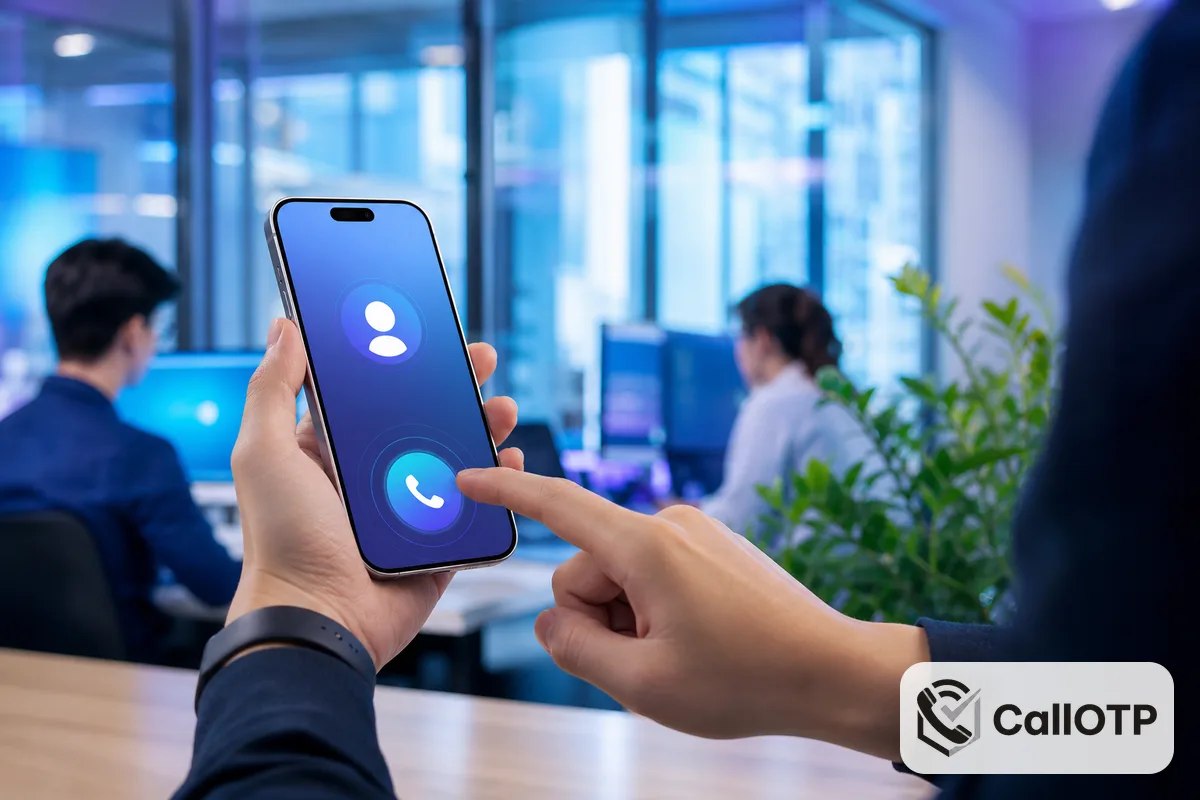
Here’s how inbound call verification works for apps in Vietnam:
- Instant confirmation: Users tap to call a hotline from the phone being verified. The system matches the caller ID against the number provided, confirming ownership in seconds.
- No SMS fees or delays: Unlike SMS OTP, there are no carrier fees, delivery failures, or waiting for codes that might not arrive.
- No OTT app dependency: Users don’t need WhatsApp, Zalo, or Telegram installed—just a basic phone that can make calls.
- Zero cost to users: Calls are rejected before connection, so no airtime is charged. This matters in Southeast Asia, where prepaid users avoid toll numbers.
For developers, integrating this method is straightforward with APIs that return verification results via webhook. Unlike SMS or voice OTP, there’s no code for users to type or message for attackers to intercept.
Learn more in our guide to phone verification by call for implementation details. While no single method stops all fraud, call-based verification adds a strong first layer without adding steps that frustrate real users in Vietnam.
Rate limits and sign-up throttling
Blocking fake accounts requires balancing security with user experience. Implement these controls to slow down attackers while keeping sign-up smooth for real users in Vietnam:
- Block suspicious IPs after failed attempts: Automatically blacklist IPs with multiple failed verification attempts (3-5 typically works). For apps in Vietnam, track VPN exit nodes and data-center IP ranges often used for fraud.
- Delay verification codes during spikes: Add progressive delays between retries (30s, 5min, 1hr) when an IP or device requests many verifications in a short time. This stops brute-force attacks without locking out legitimate users.
- Flag disposable email domains: Maintain a list of temporary email services common in Southeast Asia. Require additional checks (captcha, social login) when these domains are used.
For Vietnamese apps, combine these with:
- Device fingerprinting to detect emulators or reset devices
- Geofencing to block sign-ups from unexpected countries
- Time-based limits (e.g., 5 accounts per device per day)
Adjust thresholds based on your fraud patterns – gaming apps often need stricter limits than e-commerce. Test changes to avoid false positives that hurt conversion.
Device and behavior signals in Southeast Asia
Fake account farms in Vietnam often use Android emulators to mass-register accounts. Check for virtualization flags, uncommon sensor configurations, or mismatched GPU drivers—real low-end phones in Southeast Asia typically show consistent, imperfect hardware signatures. Emulators may also lack regional carrier profiles or have suspiciously uniform performance metrics.

GPS spoofing is common in promotion abuse, where users fake locations to claim area-specific discounts. Look for sudden jumps between distant coordinates, altitude mismatches (e.g., "0m" in mountainous regions), or Wi-Fi SSIDs that don’t match the claimed location. In Vietnam, consider cross-referencing mobile network tower data when available.
Low-end phones dominate the Vietnamese market but behave differently from bots:
- Screen interaction: Real users exhibit irregular touch patterns (varying pressure, swipe angles), while bots often generate unnaturally precise taps.
- Battery and charging: Farming devices may report constant 100% charge, whereas genuine users show fluctuating levels and charging cycles.
- App usage: Bots rarely switch between apps like messaging or social media during sign-up flows—common behavior in Southeast Asia.
Layer these signals with phone verification to reduce false positives. For example, a device with emulator flags but verified through inbound call authentication is more likely to be a developer’s test environment than a fraud farm.
Compare verification methods for Vietnam
Vietnamese apps typically choose between three phone-verification methods, each with distinct trade-offs for cost, delivery, and fraud resistance:
| Method | Cost driver | Delivery risk | Common fraud bypass |
|---|---|---|---|
| SMS OTP | Carrier fees per message | Filtered as spam, no data signal | SMS pumping, SIM swaps |
| OTT apps (Zalo/WhatsApp) | API call volume | User must have app installed | Stolen session tokens |
| Call verification | Shared hotline numbers | Carrier call blocking | Caller ID spoofing (rare) |
SMS OTP remains widespread but suffers from unpredictable costs and delivery delays in Vietnam. Fraudsters exploit it by flooding numbers with OTPs (SMS pumping) or porting numbers via SIM swaps.
OTT apps like WhatsApp or Zalo avoid carrier fees but require users to install and log into the app. Attackers bypass this by hijacking active sessions through malware or phishing.
Call verification uses inbound calls to shared hotlines, rejecting them before connection to avoid user charges. It sidesteps SMS filtering and app dependencies, though sophisticated spoofing can mimic caller IDs. Most apps in Southeast Asia combine it with rate limits for layered protection.
For Vietnamese user bases, consider: SMS OTP for legacy systems where users expect codes, OTT for apps with chat features, and call verification for cost-sensitive or high-fraud scenarios needing carrier-level number proof.
Anti-fraud settings for Vietnamese apps
Tailor your anti-fraud rules to local telecom patterns in Vietnam. These adjustments help block fake accounts while minimizing false positives for legitimate users.
Adjust thresholds for regional SMS delays
- Extend OTP timeout windows beyond standard 60-90 seconds in rural areas where mobile networks often have delays
- Allow 2-3 retry attempts for users in provinces with known connectivity issues before locking the sign-up flow
- Log delivery latency by carrier (Viettel, Vinaphone, Mobifone) to identify regional trouble spots
Whitelist legitimate COD call centers
- Maintain a dynamic list of verified caller IDs from e-commerce and logistics partners for cash-on-delivery verification calls
- Exempt these numbers from strict "recently used phone number" checks that might flag shared devices
- Review whitelist monthly as delivery fleets expand and agents change SIMs
Handle SIM swap alerts from carriers
- Integrate with telco APIs where available to detect recent SIM changes before processing sensitive transactions
- Trigger step-up verification (like inbound call verification) for accounts accessing from new devices shortly after SIM updates
- Educate users about SIM swap risks during password reset flows - many Vietnamese users don't know carriers offer swap notifications
For apps in Vietnam, combine these with standard rate limiting and device fingerprinting. No single setting stops all fraud, but layered checks tuned to local behavior patterns catch most fake accounts without frustrating real users.
Prevent fake accounts without SMS costs or OTT dependencies—try phone verification by inbound call. Set up a free trial in the CallOTP portal to test integration with your sign-up flow.
Frequently asked questions
How does call verification prevent SMS pumping attacks?+
Since no SMS is sent, there are no per-message costs for fraudsters to exploit. Call rejection happens before the network charges apply.
Do users need WhatsApp or Zalo installed?+
No. Verification works with any mobile phone—users simply tap to call the hotline number displayed in your app.
What if the user's phone doesn't show missed calls?+
The call is rejected before ringing, so it typically doesn't appear in the call log. Users see immediate success/failure in your app's UI.
Can fraudsters spoof caller ID to bypass this?+
Caller ID spoofing is harder than SMS interception, but combine with rate limits and device checks for layered security.
How quickly can we integrate this into our sign-up flow?+
Most teams add the API call and webhook handler in under a day. The portal provides sample code for common platforms.
- #fraud prevention
- #phone verification
- #fake accounts vietnam
- #user authentication
- #signup security
- #southeast asia
Ready to verify phone numbers with one call?
Start free trial